















Introduction
Running a modern commercial enterprise requires constant adaptation, sharp operational focus, and digital tools that match your exact business model. For years, company leaders relied heavily on generic, off-the-shelf software packages to handle their daily workflows, accounting, and customer data. While these ready-made programs may seem affordable and convenient at first, they often introduce massive operational bottlenecks that hinder long-term growth and restrict daily productivity. Transitioning to professional Web Application Development changes how you handle daily operations, replacing rigid limitations with complete flexibility and automated precision.
Modern business competition demands speed, customization, and seamless integration across every single department and digital workflow. When you implement a dedicated application built through expert Web Application Development, you bridge the gap between your unique business goals and your daily backroom execution. This tailored integration ensures that every internal process is recorded instantly, eliminating manual data silos and protecting your operational efficiency from unexpected friction. Whether you run a fast-growing digital startup or a well-established industrial enterprise, focusing on proper development is no longer optional if you want to stay competitive.
As the corporate landscape continues to evolve rapidly, efficiency and adaptability dictate which businesses survive and which ones fall behind. Adopting a high-end application crafted through strategic Web Application Development allows you to identify unique workflow efficiencies, eliminate repetitive administrative tasks, and scale your digital ecosystem with confidence. Discover how the right web application strategy can transform your business operations, accelerate long-term growth, and position your enterprise for lasting success with TechnoComet Solutions.
✨ What Is Web Application Development?
Understanding how modern software systems function is the absolutely critical first step toward completely modernizing your corporate workflow, eliminating daily administrative friction, establishing total operational visibility, aligning disparate departments, and empowering long-term organizational scalability across all competitive markets through Web Application Development. Furthermore, mastering these foundational architectural concepts ensures that business leaders select the most appropriate software packages for their unique industrial sectors.
✅ Understanding Web Applications and Their Purpose
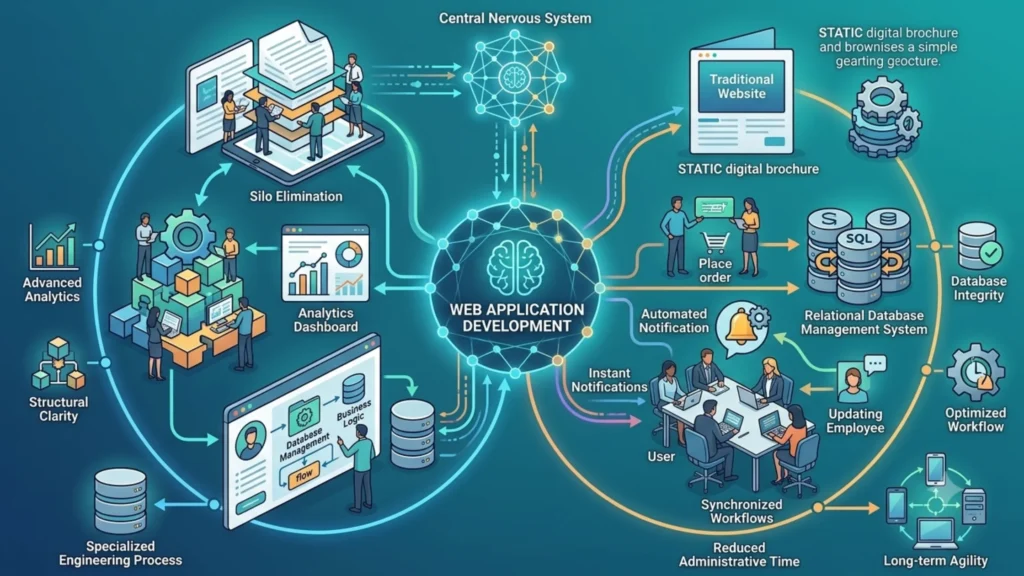
At its core, web development refers to the specialized engineering process used to build interactive software programs that run inside web browsers. Unlike simple static sites, modern platforms built through web application development combine complex databases, user management portals, and automated business logic into one unified system.
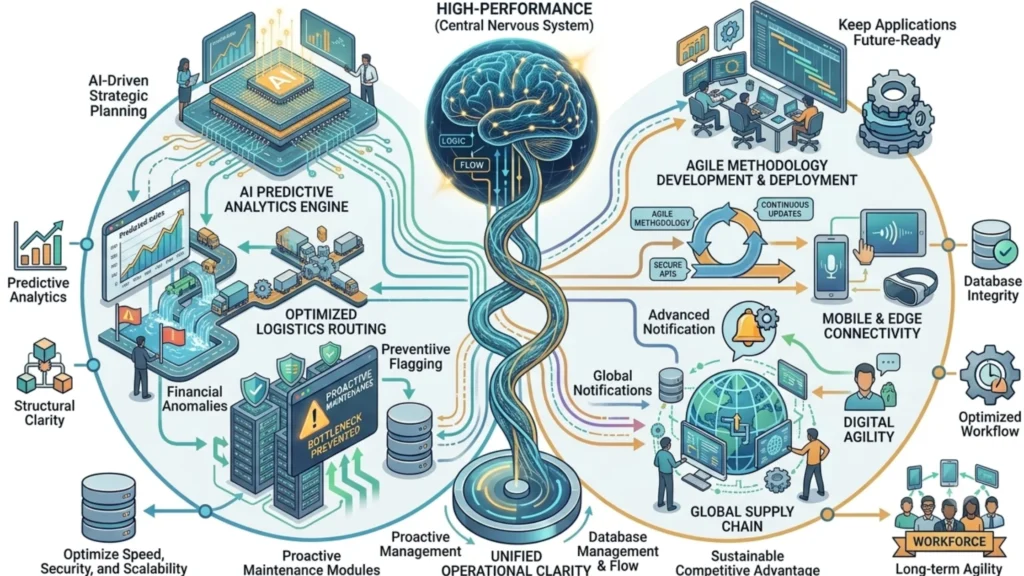
- Central Nervous System: Acts as an operational backbone, ensuring smooth inter-departmental communication daily.
- Silo Elimination: Destroys data silos so employees can collaborate without unnecessary friction or delays.
- Structural Clarity: Gives organizations the operational clarity needed to expand safety and efficiency.
- Advanced Analytics: Incorporates modules that aggregate company-wide metrics into actionable dashboards.
✅ Web Applications vs. Traditional Websites
Traditional business websites often operate as digital brochures that provide static information to visitors. In contrast, platforms created through Web Application Development are dynamic, interactive, and built to perform specific tasks or transactions. When a customer places an order online or an employee updates a database, the platform automates notifications across all relevant departments instantly.
This integrated architecture makes professional Web Application Development completely indispensable for achieving long-term business agility. Businesses that rely on these synchronized workflows dramatically reduce their overall administrative processing times. Beneath the user interface, modern Development relies on a robust relational database management system that guarantees data integrity across every single transaction.
✨ Why Businesses Need Web Application Development
Recognizing the hidden operational pitfalls and systemic inefficiencies of legacy workflows helps organizations deeply understand why manual tracking methods ultimately hold back scalable growth, suppress profit margins, and stifle inter-departmental collaboration. Additionally, addressing these vulnerabilities prevents unexpected operational failures that routinely damage customer trust and brand reputation in fast-moving industries.
✅ Improve Business Efficiency and Productivity
Disjointed software applications and heavy paperwork severely damage daily staff productivity across the enterprise. Employees waste countless hours copying data manually across separate, uncoordinated spreadsheets every week. Without proper digital coordination, workers get trapped in repetitive administrative tasks rather than strategic goals. Investing in robust Web Application Development automates these tedious workflows to save valuable company time.
- Morale Protection: Eliminates repetitive tasks that drain employee enthusiasm and productivity.
- Project Acceleration: Prevents administrative bottlenecks from delaying important delivery timelines.
- Growth Enablement: Frees workers from fixing data discrepancies so they can drive product innovation.
- Time Savings: Streamlines daily processes through targeted Web Application Development initiatives.
✅ Enhance Customer Experience and Engagement
Deploying professional integrated software bridges communication gaps smoothly across every single department. Reliable Web Application Development ensures all workers and clients operate from identical, accurate, and up-to-date information. This single source of truth eliminates embarrassing fulfillment mistakes and improves overall client satisfaction. Leaders can finally make collaborative decisions without waiting for delayed cross-departmental reports.
This internal friction damages brand credibility and creates hostile working environments where departments continuously shift blame for project failures. Establishing a centralized operational architecture through dedicated Web Application Development resolves these coordination hurdles by aligning every business unit under a shared set of real-time metrics, thereby elevating customer engagement across every touchpoint.
✨ Key Features of a Scalable Web Application
Examining the extensive core capabilities and advanced technological architecture of modern software reveals how centralized design and automated intelligence elevate corporate performance across all metrics. Moreover, understanding these advanced features enables management teams to maximize return on investment upon full system deployment.
✅ Performance, Security, and Reliability
Elite enterprise platforms feature powerful centralized operational dashboards designed for executive oversight. Business leaders can track payroll, inventory, and supply chain analytics in one single place. Effective Web Application Development gives decision-makers total enterprise clarity without complex data consolidation hurdles. Managing daily performance through one intuitive screen saves hours of administrative cross-referencing work.
This high level of centralization empowers managers to spot negative performance trends much faster. Rather than waiting for weekly meetings or manual department spreadsheets, directors utilizing comprehensive Web Application Development can evaluate real-time organizational health with a single click while ensuring ironclad data security.
✅ Responsive Design and Easy Integration
Modern software platforms provide real-time data analytics to turn raw numbers into visual insights instantly. Automation handles routine operational tasks like invoice generation, payment reminders, and inventory reordering.
- Minimized Lag: Accelerates overall organizational throughput smoothly across devices.
- Critical Alerts: Notifies management immediately when operational metrics drop below thresholds.
- Error Reduction: Removes human intervention from administrative cycles to lower processing errors.
- Adaptive Interfaces: Ensures seamless usability across different screen sizes and operating systems.
✨ Web Application Development Process
Navigating vendor options and project lifecycles carefully ensures that your chosen software deployment matches long-term business goals, budgetary limitations, security compliance standards, and precise technical requirements. Furthermore, a structured engineering methodology minimizes unexpected expenses during the initial system integration phase.
✅ Planning, Design, and Development
Selecting the right software platform requires careful evaluation of unique operational needs. Reliable Web Application Development requires intuitive user interfaces and robust horizontal scalability. Strong integration capabilities with existing tools and responsive support ensure deployment success. The system must be easy to adopt so staff can transition without extensive training.
Choosing a modular design allows your tech stack to expand alongside transaction volumes. Implementing enterprise software is a multi-year investment, making it vital to select a partner whose product roadmap aligns with your organization’s future growth targets. Decision-makers must evaluate whether prospective Web Application Development phases offer robust API integrations to connect smoothly with legacy platforms.
✅ Testing, Deployment, and Maintenance
Adopting enterprise applications requires choosing between modern cloud subscriptions and traditional server hosting. On-premise deployment requires heavy upfront capital investment for local hardware and maintenance staff. Cloud-based Web Application Development approaches offer lower initial costs, automatic updates, and remote access flexibility.
The architectural debate between cloud hosting and local server infrastructure remains a primary consideration for IT directors during vendor selection. While traditional deployments give organizations absolute physical control over their hardware, modern approaches to Web Development utilize cloud infrastructure to eliminate massive capital outlays by shifting infrastructure costs into predictable, subscription-based operational expenses.
✨ Best Practices for Building High-Performance Web Applications
Looking ahead at emerging technology trends demonstrates how artificial intelligence, machine learning algorithms, and next-generation cloud architectures will continue reshaping corporate management permanently. Additionally, staying informed about these innovations guarantees that modern enterprises utilizing advanced Web Application Development maintain a sustainable competitive advantage well into the future.
✅ Optimize Speed, Security, and Scalability
Artificial intelligence is rapidly transforming how contemporary enterprise software functions on a daily basis. Cutting-edge Web Application Development uses predictive analytics to forecast future customer demand accurately. These smart features flag financial anomalies and optimize supply chain shipping routes automatically.
- Predictive Analytics: Forecasts customer demand accurately to guide strategic planning.
- Automated Routing: Flags financial anomalies and optimizes workflow paths instantly.
- Proactive Maintenance: Warns engineers about potential system bottlenecks before downtime occurs.
- Competitive Edge: Integrates machine learning algorithms to give firms a distinct market advantage.
✅ Keep Applications Updated and Future-Ready
Hybrid and remote work models drive high market demand for mobile-friendly cloud software. Future platform iterations will feature deep mobile integration, voice-activated commands, and enhanced security. Implementing agile Web Application Development ensures your business stays resilient against market volatility.
As global supply chains grow increasingly complex, digital agility remains a primary competitive differentiator. Organizations embracing these cloud trends today position themselves for industry leadership tomorrow. The continuous evolution of mobile computing and edge-device connectivity ensures that corporate management is no longer confined to physical desktop workstations, making ongoing maintenance in Web Application Development vital for long-term survival.
✨ Future Trends in Web Application Development
Leveraging advanced software architecture directly translates into maximized labor productivity, streamlined fulfillment cycles, minimized resource waste, and heavily reduced enterprise overhead expenses over time. Consequently, organizations experience accelerated revenue growth and significantly enhanced profit margins across every operational division.
✅ AI, Cloud Computing, and Progressive Web Apps
System automation lifts heavy administrative burdens to make employee productivity skyrocket across teams. Staff members equipped with platforms built via Web Application Development spend less time searching for files or correcting entry mistakes. Streamlined workflows accelerate project delivery timelines and maximize overall client retention rates.
This seamless daily coordination transforms messy operations into a well-organized corporate machine. Employees can focus their energy on high-value tasks that directly generate revenue. When administrative friction is stripped away by efficient management software, workers experience a renewed sense of engagement and purpose within their respective roles through modern Web Application Development.
✅ Emerging Technologies Shaping Modern Web Apps
Operational waste drains financial resources and narrows profit margins every single month. Advanced business tools quickly identify and eliminate these specific areas of financial waste. Modern Web Application Development provides accurate forecasting data necessary for confident strategic decisions. Purchasing managers can order exact inventory quantities, avoiding costly storage fees and spoilage.
Data-driven resource allocation ensures every dollar spent contributes directly to sustainable business growth. Financial optimization relies heavily on precise visibility into inventory turnover ratios, vendor pricing trends, and labor expenditure allocations driven by custom Web Application Development.
Conclusion
Navigating the complexities of modern commerce requires much more than hard work because it demands smart, connected operational systems. Throughout this guide, we have explored how disjointed workflows drain profitability and how centralized platforms solve persistent organizational challenges. Investing in robust Web Application Development is no longer a luxury reserved exclusively for massive multinational corporations.
Whether you run a small local business or a fast-scaling brand, modern platforms built through expert Web Application Development bring all core processes seamlessly under one unified roof. By streamlining daily operations, boosting cross-departmental coordination, eliminating manual data entry, and unlocking real-time insights, professional Web Application Development provides the ultimate growth foundation.
Making this vital digital switch today actively positions your enterprise far ahead of aggressive market competitors, secures absolute operational transparency across every administrative department, empowers executives to make lightning-fast strategic adjustments based on live financial metrics, drastically reduces resource waste, and ensures seamless, highly profitable corporate execution for many successful years to come.
Reach out to TechnoComet Solutions today! 🚀💡📌
FAQs
What Is Web Application Development?
Web Application Development is the process of building interactive software programs that run inside web browsers, combining databases and automated workflows to streamline operations.
Why Does My Business Need a Web Application?
It eliminates rigid off-the-shelf software limitations, stops manual spreadsheet errors, and gives your team a custom digital tool designed for your exact workflow.
What Are the Core Stages of the Development Lifecycle?
The process includes initial planning and wireframe design, followed by coding, rigorous quality assurance testing, and long-term maintenance and updates.
How Long Does a Custom Project Take?
Timelines vary depending on project scope and features. Smaller tools take a few weeks, while large-scale enterprise platforms require several months of development.
How Do I Measure Application Success?
You can track success using Key Performance Indicators (KPIs) like system adoption rates, faster task completion speeds, and a reduction in manual data errors.